Warehouse and Industrial Network Cabling in Phoenix
Long cable pathways, high ceilings, large floor areas, multiple network distribution locations and widespread wireless requirements can all affect how the physical network should be designed and installed.
Phoenix Communication Solutions installs commercial network cabling infrastructure for warehouse and industrial environments throughout the Phoenix area.
What Network Cabling Does a Warehouse Need?
Potential connection points include:
- Offices
- Shipping and receiving areas
- Workstations
- Printers
- Wireless access points
- Cameras
- Network equipment
- Building systems
- Warehouse devices requiring wired connectivity

Cat6 and Cat6A in Warehouse Environments
Cat6 and Cat6A may support workstations, access points, cameras and other Ethernet-connected devices.
Cable type should be selected based on the network requirements and physical conditions rather than simply using the same design as a small office.
When Should a Warehouse Use Fiber?
Fiber can connect an MDF to remote IDFs or other parts of the building while copper cabling serves endpoints closer to each network location.
Wireless Access Point Cabling for Warehouses
The physical access-point cabling should be coordinated with the wireless design so cable runs terminate where the network equipment is intended to be installed.
Phoenix Communication Solutions provides the physical cabling infrastructure for commercial wireless access points.
MDF and IDF Infrastructure for Large Facilities
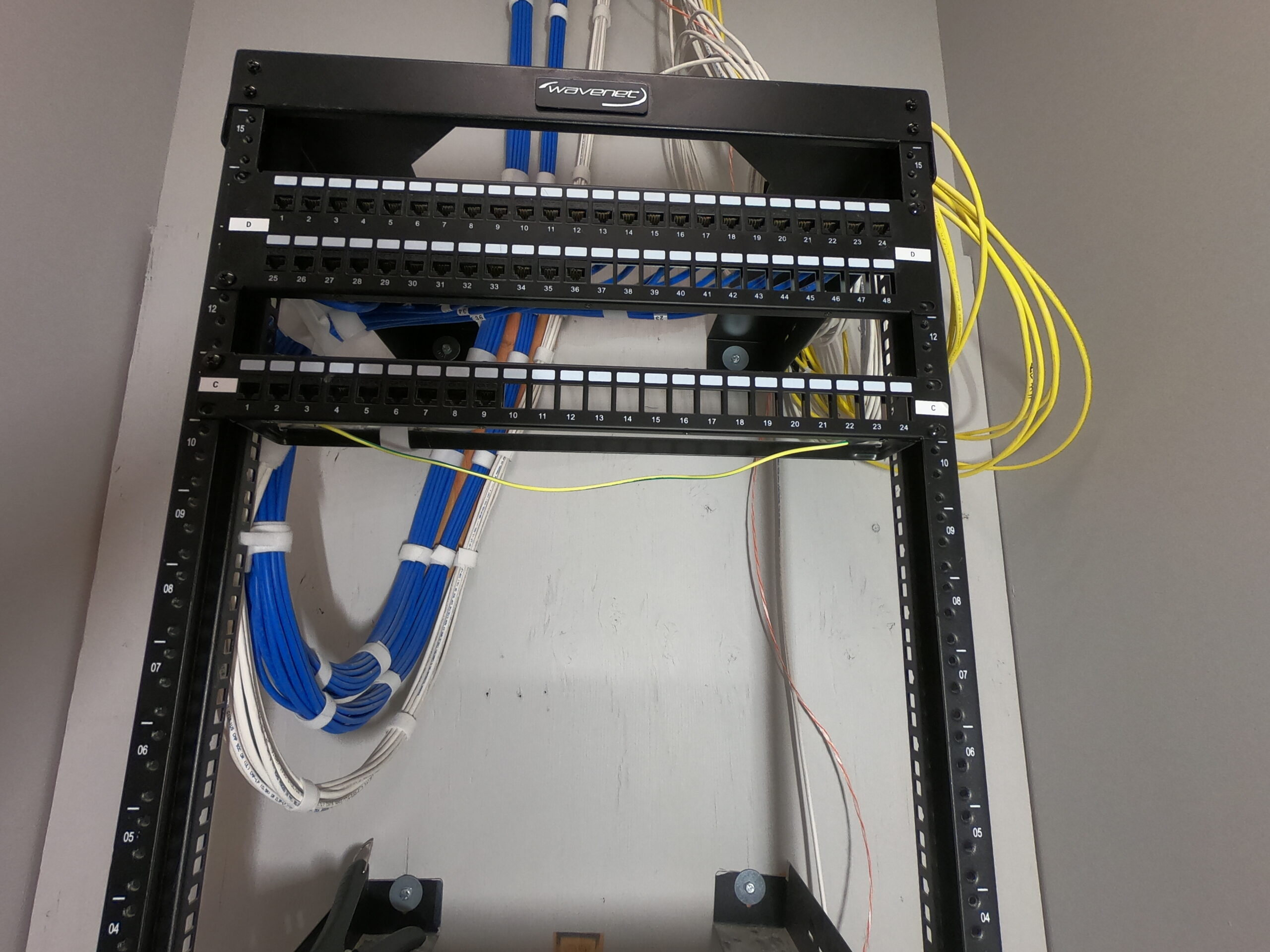
MDF and IDF infrastructure can include racks, patch panels, cable management, copper cabling and fiber backbone connections.
Network rooms should be organized and labeled so IT teams can identify connections and make future changes efficiently.

Surveillance Cabling in Warehouse Environments
Camera cabling may need to cover entrances, shipping areas, storage areas and other operational spaces.
Surveillance infrastructure should be coordinated with the network and pathway design.
Warehouse Cabling Project Proof
FAQs
What type of network cabling is best for a warehouse?
Can Cat6 be used throughout a warehouse?
How do wireless access points connect in a warehouse?
Can fiber connect different areas of a warehouse?

Trusted Phoenix Low-Voltage Contractor Providing Structured Cabling, Fiber Optic Installation, and Network Infrastructure Solutions Across Arizona